About the Guild
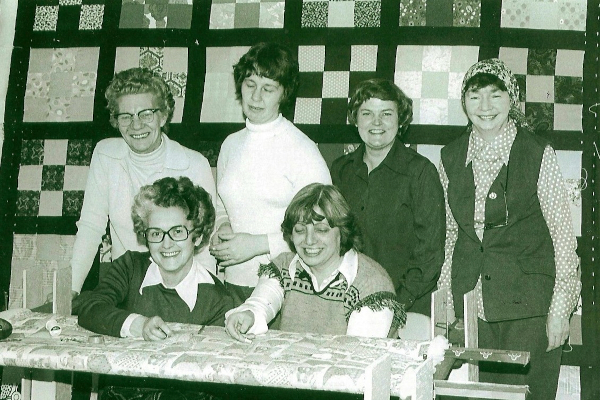
Back row from the left: Flo Conconi, Jean Van Holst, Jeanette Eaton and Vivien Leakey. Front from left – Betty MacPherson and Shirley Orrick. Flo was the one that started giving quilting lessons in a studio on their property in Parksville
History
The Quilt House, a large studio built by Flo’s husband, became a welcoming place where quilters could learn, create, and support one another. As interest grew, Flo’s students organized a two-day quilting workshop in Parksville, inviting participants from communities across Vancouver Island. The success of the workshop inspired the formation of the Parksville Quilt House Quilters’ Guild. In 1979, an interim executive was established, a constitution was drafted, and the Guild officially began.
In 1981, the Guild was registered as an educational society. The Guild quickly became a vibrant quilting community, holding regular meetings and organizing quilt shows. Its first major exhibition, A Century of Canadian Quilts, featured antique quilts owned by Island residents alongside the work of Guild members.
Since then, the Guild has continued to celebrate and promote the art of quilting while fostering friendship, learning, and creativity among its members. Today, with more than 300 members, the Parksville Quilt House Quilters’ Guild remains one of the oldest quilting guilds in British Columbia and a cornerstone of the quilting community on Vancouver Island.
Growth of the Guild and Our Logo

The Guild’s first two meetings were held in Flo Conconi’s Quilt House on Stanford Avenue in Parksville. Interest in quilting grew quickly, and before long a larger meeting space was needed. The Guild moved to the Nanoose Library Hall, which served as its home for several years. During this time, the Guild was working to register its constitution.
Although members preferred a simpler name, government requirements resulted in the official name: Parksville Quilt House Quilters Guild. Flo’s home address was initially used as the Guild’s registered address.
When Flo later moved to Victoria, the Guild began using a post office box. Government regulations required a street address, so the Guild registered the address of the Parksville Post Office. Even after the post office relocated and the address became that of a local café, it remained the Guild’s official registered address for several years.
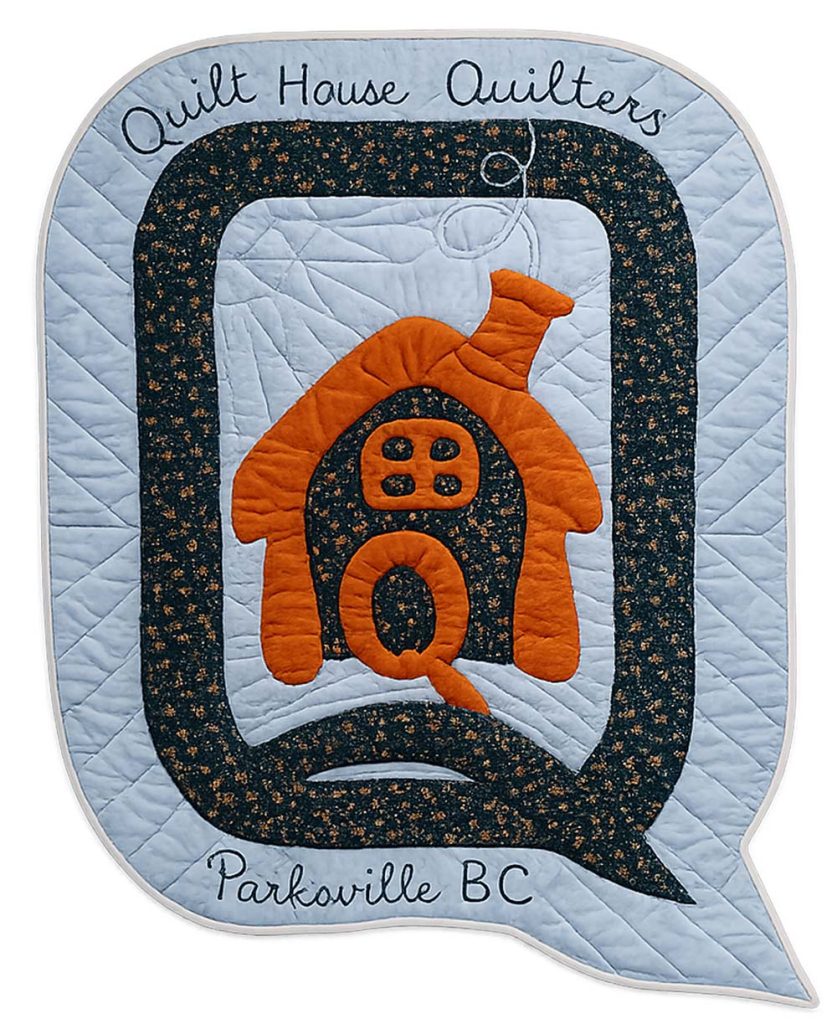
As the Guild grew, members decided to create a logo. A design competition was held, and the final logo combined ideas from two members. The large “Q” represented quilting, while the design reflected the friendship and welcoming spirit of the original Quilt House. The chimney was shaped like a spool of thread, with thread passing through the eye of a needle, and the tail of the “Q” formed a path leading to an open door.
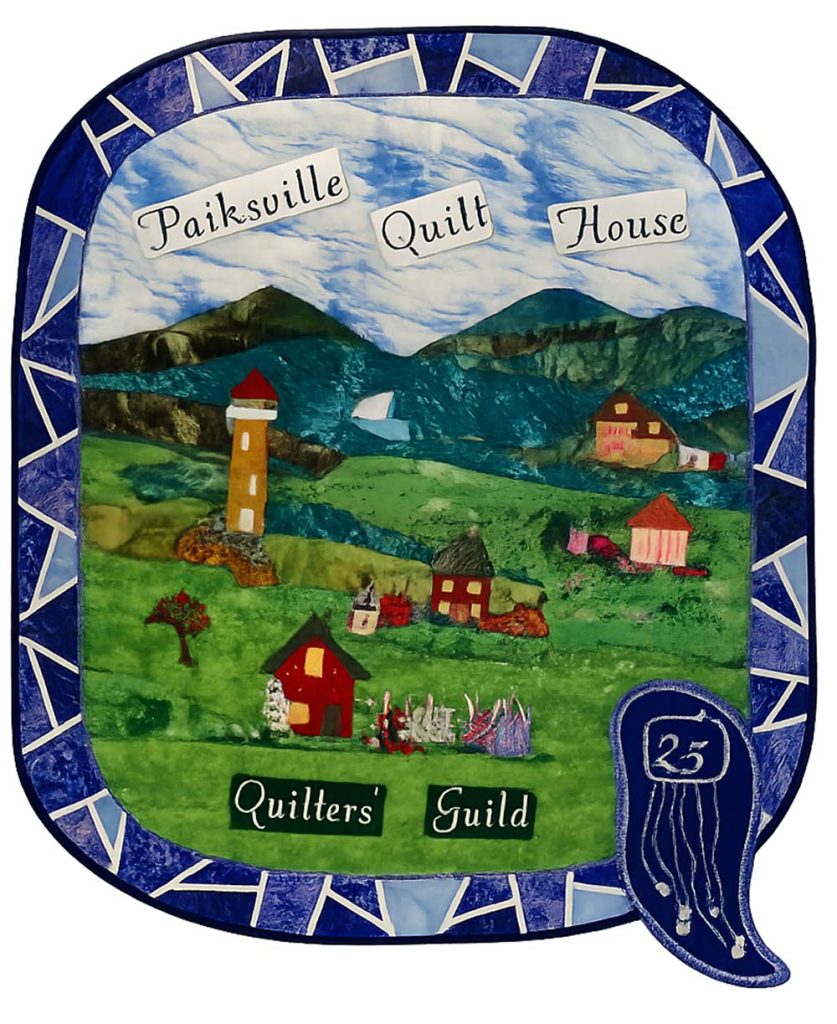
The logo was later transformed into a wall hanging and presented to Flo Conconi when she was awarded Life Membership and moved to Victoria. Although the logo has been updated over the years, its original meaning and symbolism remain an important part of the Guild’s history.
The First "Really Big" Quilt Show!
Between 1979 and 1981, Guild members shared their work at local arts and crafts events in Parksville, Qualicum Beach, Nanaimo, and Victoria. Inspired by a major quilt show in Toronto attended by Flo Conconi and Valerie Looy in 1980, members decided to organize a quilt show of their own. With support from the Town of Parksville and the enthusiasm of Guild members, planning began for what became “A Century of Canadian Quilting.” Held July 1–4, 1981, the show featured more than 150 quilts, including many historic quilts generously loaned by Vancouver Island residents.
The response from the community was overwhelming, with quilt owners eager to share family treasures that had often been stored away for generations. The exhibition recreated rooms from the nineteenth and early twentieth centuries, displaying quilts alongside period furnishings and artifacts. More than 2,000 visitors attended during the four-day event, making it a tremendous success and establishing the Guild’s reputation as a leader in preserving and celebrating quilting heritage.
The show also included quilting demonstrations, a merchants’ mall, and a boutique featuring members’ work. Although quilting was often viewed as a pastime for a small group of enthusiasts, the success of A Century of Canadian Quilting helped showcase quilting as a respected art form and laid the foundation for future quilt shows on Vancouver Island.
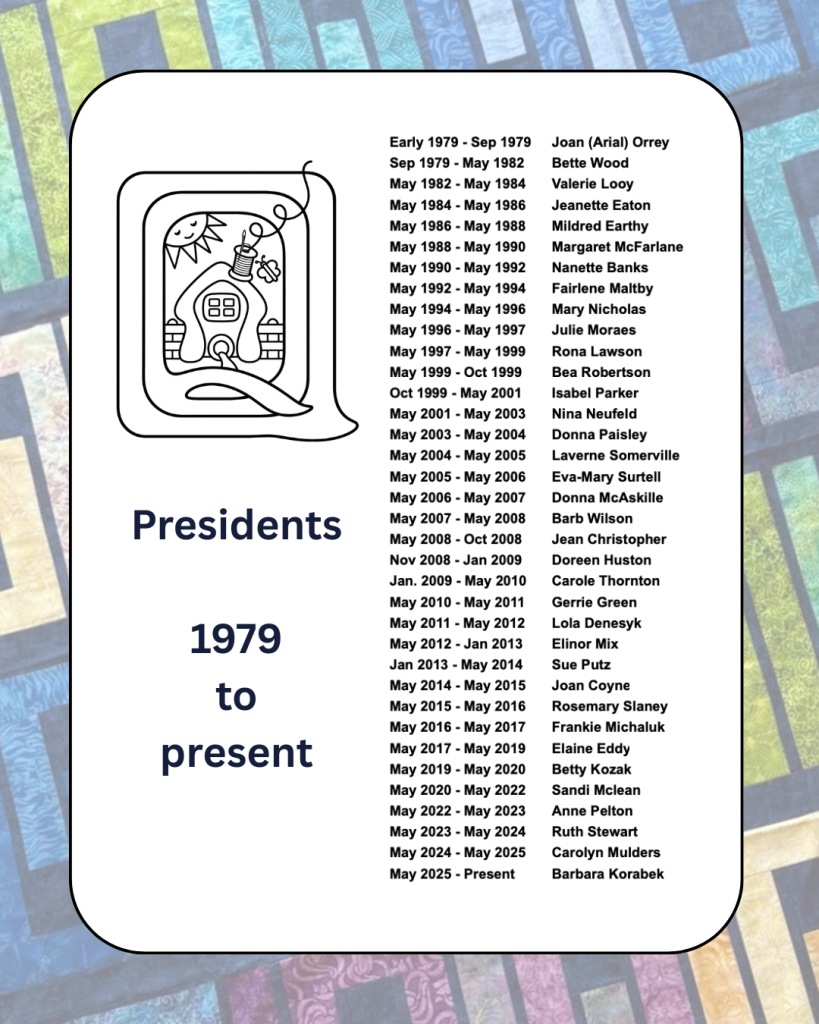
Honouring PQHQG Presidents